
The Complete African Grey Care Guide
Everything you need to know about diet, housing, daily care, and training for your African Grey companion.
Introduction
African Grey parrots are among the most intelligent and captivating birds you can share your life with. They bond deeply with their humans, develop strong personalities with a witty sense of humor, and can live 40 to 60+ years with proper care .
However, these remarkable birds come with significant responsibilities. Their intelligence means they require constant mental stimulation, social interaction, and dedicated care to thrive. This guide covers everything you need to know to provide a long, healthy, and happy life for your Grey.
Species Overview
| Detail | Congo African Grey | Timneh African Grey |
|---|---|---|
| Size | Larger (up to 16 inches) | Smaller (up to 9-12 inches) |
| Tail Color | Bright red | Dark maroon |
| Temperament | Often more vocal and bold | Often calmer and more relaxed |
| Talking Ability | Excellent | Excellent |
Both subspecies are highly intelligent, social, and capable of learning hundreds of words .
Housing & Cage Setup
Cage Size Requirements
Your African Grey needs space to spread their wings, climb, and play without feeling cramped.
| Requirement | Specification |
|---|---|
| Minimum dimensions | 3 ft (L) x 3 ft (W) x 4 ft (H) |
| Recommended | 40″ x 30″ x 65″ or larger |
| Bar spacing | ¾ inch to 1 inch (prevents escape or getting stuck) |
| Material | Stainless steel or powder-coated metal (bird-safe) |
Important: Width is more important than height. A wider cage is safer—if your bird falls, a shorter distance means less risk of injury .
Cage Placement
| Do | Don’t |
|---|---|
| Place in an active part of your home | Place in the kitchen (cooking fumes are toxic) |
| Keep in a draft-free, well-lit area | Place near doors, windows, or vents |
| Allow 6-8 hours of sunlight or UV light daily | Expose to plug-in air fresheners or candles |
| Maintain temperatures between 65-80°F | Place directly next to windows (greys feel vulnerable) |
Note: Some African Greys feel anxious in cages placed directly against windows. Provide a visual barrier (like a blanket over part of the cage) so your bird can hide when they feel vulnerable .
Perches
-
Provide perches of varying sizes and materials (natural branches, braided rope, wood, concrete)
-
Perch diameter should be no more than 2½ inches—wide enough to prevent slipping, but not so wide they can’t grip securely
-
Never place perches above food and water bowls (droppings could fall into them)
-
Natural branches are especially good for foot health and exercise
Toys & Enrichment
African Greys are highly intelligent and need daily mental stimulation. A bored Grey is an unhappy Grey.
Provide a variety of toys and rotate them regularly:
-
Wooden chew toys (for beak exercise)
-
Puzzle/foraging toys (encourage natural food-seeking behavior)
-
Shreddable materials (cardboard, paper)
-
Hard plastic toys
Important: Only introduce new toys one at a time—African Greys don’t always deal well with sudden change .
Cleaning & Maintenance
| Task | Frequency |
|---|---|
| Spot clean | Daily (remove discarded food, waste, clean bowls) |
| Wash bowls | Daily with soap and water |
| Replace bedding | Weekly |
| Deep clean | Weekly (move bird to safe location first) |
Deep cleaning method :
-
Move your Grey to a travel cage
-
Remove and discard old bedding
-
Remove perches, toys, bowls, and accessories
-
Clean cage with bird-safe cleaner or 3% bleach solution
-
Thoroughly rinse until no smell remains
-
Let everything dry completely before returning items and your bird
Feeding & Nutrition
The Ideal Daily Diet
High-quality pellets should make up 60–70% of your Grey’s diet . Pellets provide complete, balanced nutrition.
Fresh vegetables, greens, and legumes should account for 20–25% of the diet .
Seeds should be limited (20% or less of the diet) .
Fruits should be 10% or less (high in sugar) .
Recommended vegetables: Sweet potatoes, bell peppers, carrots, broccoli, dark leafy greens (kale, collards, Swiss chard), squash, peas, green beans .
Recommended fruits (limited): Berries, melons, mango, papaya, pomegranate, apple (remove seeds), orange, banana .
Nuts (limited): Almonds, walnuts, Brazil nuts—only a couple per day .
Toxic Foods – Never Feed
| Food | Danger |
|---|---|
| Avocado | Highly toxic—can be fatal |
| Chocolate | Toxic to birds |
| Caffeine (coffee, tea, soda) | Toxic |
| Alcohol | Toxic |
| Onions & Garlic | Can cause anemia |
| Apple seeds & fruit pits | Contain cyanide |
| High-sodium foods | Dangerous to kidneys |
| High-fat junk food | French fries, pizza, fatty meats |
Converting Your Grey to Pellets
Transitioning from seeds to pellets takes patience—usually 2-8 weeks .
The gradual method :
-
Start with 90% current seeds and 10% pellets
-
Each day, reduce seeds by 10% and increase pellets by 10%
-
If your bird isn’t eating pellets after 2-6 weeks, restart with a different pellet brand
-
Never withdraw seeds entirely without first being certain your bird is eating the pellets
Pro tips:
-
Weigh your bird regularly on a gram scale during transition to ensure they’re not losing weight
-
Consult your avian vet if you encounter problems
-
Remember: “A bird saying no to a food item one day does not mean no forever—KEEP TRYING!”
Water & Supplements
-
Fresh, clean water must be available at all times
-
Change water bowls daily
-
Cuttlebones provide calcium and help keep beaks healthy
-
Birds eating 75-80% pellets do not need supplements—pellets are nutritionally complete
-
Consult your avian vet before starting any supplement
Training & Behavior
Building Trust
Before your Grey starts talking, they need to feel safe and comfortable with you.
Start with:
-
Sitting near their cage and talking softly
-
Letting them get used to your presence
-
Washing your hands thoroughly before handling to avoid transferring oils or disease
-
Observing their body language (pinned eyes or flared tail feathers may mean they don’t want to be held)
Teaching Your Grey to Talk
African Greys are among the most talkative parrot species—they can learn hundreds of words and mimic human sounds . Some can even speak in context and understand meaning .
Key principles :
| Principle | How To |
|---|---|
| Start early | Begin as soon as you bring your Grey home |
| Repetition | Repeat chosen phrases over and over |
| Enthusiasm | Use an excited, animated tone—greys respond to emotion |
| Context | Say words during relevant actions (“Hello” when entering) |
| Reward | Praise and treats for any effort |
| Patience | It can take months; don’t expect instant results |
The “time-out” method for unwanted behavior:
-
If your Grey bites or screams, don’t yell or hit—put them back in their cage and walk away
-
This teaches them that bad behavior won’t bring attention
-
Ignore unwanted sounds completely; reward desired sounds with treats and attention
Common Behavioral Issues
Feather plucking, screaming, and biting are common problems from stress, boredom, or health issues .
If you notice these, check:
-
Enrichment and toys (are they bored?)
-
Social interaction (are they getting enough time with you?)
-
Environment (is it too noisy or stressful?)
-
Health (could there be an underlying medical issue?)
About wing trimming:
-
Let your Grey fledge first—allow them to learn to fly before trimming
-
Once proficient, only do a light trim (outer 5 flight feathers half-length)
-
A heavy trim can cause falls, injury, and fear
Health Care
Common Health Issues in African Greys
| Condition | Signs | Prevention |
|---|---|---|
| Calcium deficiency | Muscle tremors, seizures | Balanced pellet diet, cuttlebone |
| Vitamin A deficiency | Respiratory issues, poor feathers | Orange/red vegetables (carrots, sweet potato, peppers) |
| Aspergillosis (fungal) | Difficulty breathing, sneezing, lethargy | Clean cage, good air quality |
| Feather destructive behavior (FDB) | Chewing plucking feathers | Enrichment, social interaction, vet care |
| Bacterial infections | Respiratory signs similar to aspergillosis | Clean environment, vet care |
| Obesity | Lethargy, weight gain | Limited seeds/nuts, balanced diet |
Veterinary Care
-
Annual check-ups with an avian vet are essential
-
Watch for warning signs:
-
Eye or nasal discharge
-
Loss of appetite
-
Overgrown or fractured beak
-
Vomiting, limping, or constantly fluffed feathers
-
If you notice any of these signs, contact your avian vet immediately.
Quick Reference Checklist
| Task | Frequency |
|---|---|
| Feed pellets (60-70%) | Daily |
| Fresh vegetables (20-25%) | Daily |
| Change water | Daily |
| Wash food/water bowls | Daily |
| Spot clean cage | Daily |
| Replace bedding | Weekly |
| Deep clean cage | Weekly |
| Bathe your Grey | 2-3 times per week |
| Out-of-cage time | 3-4 hours daily |
| Annual vet check | Yearly |
Supply Checklist
Before bringing your African Grey home, make sure you have :
| Item | Details |
|---|---|
| Cage | At least 3′ x 3′ x 4′ (larger is better) |
| Perches | 2-3 of varying sizes and materials |
| Food bowls | One for pellets, one for fresh food |
| Water bowl | Large enough for bathing |
| Pellets | High-quality brand (Harrison’s, Roudybush, Zupreem) |
| Cuttlebone | For calcium |
| Toys | Variety (chew, puzzle, foraging) |
| Bedding | Paper-based or habitat paper |
| Spray bottle | For misting/bathing |
| Play gym | Out-of-cage activity |
The Grey Parrot Companion Promise
At Grey Parrot Companions, we’re here for every step of your journey together. Whether you need help with diet, training, or behavior, our team is just an email or phone call away.
Ready to welcome an African Grey into your family? Browse available parrots → | Learn about adoption →
Need personalized care advice? Contact our team →
Nutrition Guide: What to Feed Your African Grey for a Long, Healthy Life
Good nutrition is the single most important factor in your African Grey’s health and longevity. [...]
Jul
Training & Talking Tips: Help Your Grey Learn to Talk and Build a Stronger Bond
African Grey parrots are known as the Einsteins of the bird world. Their intelligence rivals [...]
Jul
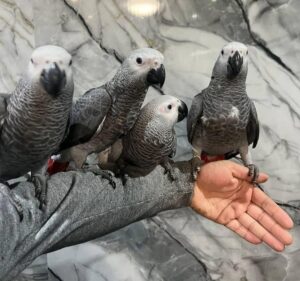
The Complete African Grey Care Guide
Welcome to the most important guide you’ll ever read as an African Grey parent. Whether [...]
Jul