
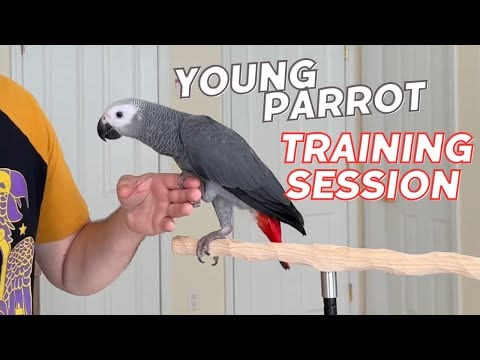
African Grey parrots are known as the Einsteins of the bird world. Their intelligence rivals that of a 6- to 7-year-old child, and they have an incredible ability to mimic human speech—some can learn hundreds of words over their lifetime . But teaching your Grey to talk isn’t just about repetition; it’s about building trust, creating positive associations, and strengthening your bond.
This guide will walk you through everything you need to know—from building trust to advanced training techniques.
Step 1: Build Trust First
Before your Grey starts talking, they need to feel safe and comfortable with you. You can’t expect a bird to say “Good morning” when it’s still trying to figure out if you’re a friend or a featherless predator .
Start by:
-
Sitting near their cage and talking softly
-
Letting them get used to your presence and tone
-
Moving at their pace—never force interaction
-
Observing their body language for signs of comfort or stress
For birds with a fear of hands, use a technique called desensitization—expose your bird to hands for short periods, always pairing them with positive things like treats. Over time, hands become associated with good things rather than threats .
Step 2: Start Simple
Begin with short, clear words like “Hello,” “Hi,” or your bird’s name. Use the same tone and repeat it often—birds learn through repetition and association .
Pro tip: Always say the word when it fits the situation. Say “Hello” when you enter the room, not randomly at midnight (unless you enjoy confusing your parrot and terrifying your family) .
Key principles:
-
Focus on one or two phrases until mastered
-
Use consistent, clear pronunciation
-
Say the word with enthusiasm and emotion
Step 3: Use Enthusiasm and Expression
African Greys respond better to emotion in your voice. Be cheerful and animated when teaching words—they’re excellent at picking up tone .
Imagine you’re:
-
A children’s TV host
-
Talking to a very judgmental toddler
-
Someone who just won the lottery (yes, that excited!)
If you sound excited, they’ll mimic that energy. If you sound bored, they’ll probably ignore you.
Step 4: Consider Whistles Before Words
Some Greys learn sounds faster than speech. Teach them to whistle first—it helps them practice controlling their voice .
Try:
-
Simple whistle melodies
-
A short tune or your phone’s ringtone
-
Sound effects they hear around the house
Once they master whistling, transitioning to words becomes easier.
Step 5: Reward and Reinforce
Whenever your Grey makes an effort—even if it’s just a sound close to the word—reward them with praise, treats, or affection. Positive reinforcement goes a long way .
The reward loop:
-
Grey makes a sound
-
You react with enthusiasm
-
Grey gets a treat or praise
-
Grey learns that talking equals attention
-
Grey talks more!
But remember: Training should be a 100% positive experience. If your bird isn’t in the mood, try again later .
Step 6: Keep Lessons Short and Fun
Training sessions should be 5 to 10 minutes at a time. Greys have strong opinions and short attention spans. If they lose interest, stop and try again later .
Think of it like:
-
A bored parrot is about as cooperative as a teenager without Wi-Fi
-
Short, fun sessions beat long, boring ones every time
-
Quality over quantity
Step 7: Create Contextual Associations
Once your Grey starts picking up words, use them in context. Greys are smart enough to connect actions to words .
Examples:
-
Say “Good morning” every morning
-
Say “Night-night” at bedtime
-
Say “Want a snack?” before feeding
-
Say “Hello” when you enter the room
-
Say “Bye-bye” when you leave
Your bird may start using these words at the appropriate times. Some even initiate conversations!
Step 8: Use Recordings Wisely
If you can’t be around all day, some owners use voice recordings of key phrases. But keep it natural—play your own voice, not random YouTube clips .
Note: Research suggests that live interaction is more effective than recordings. One study found that African Greys learned words faster when taught directly by their owners rather than via tapes . Use recordings as a supplement, not a replacement.
Step 9: Be Patient—It Takes Time
Don’t expect instantaneous results. It can take months for parrots to start talking the way you’d like . Some Greys learn quickly—one study noted birds learning new words within three days—but others take longer .
The timeline:
-
First sound attempts: weeks to months
-
First word: 3–12 months
-
Expanding vocabulary: ongoing for life
-
Contextual use: develops over years
Your Grey’s ability to learn words continues indefinitely. One Grey at 20 years old still added new words to its vocabulary .
Step 10: Laugh Through the Chaos
They’ll mispronounce things. They’ll mimic your laugh in weird situations. They might even learn to call your name when they want something. Embrace it—it’s part of the fun .
Remember:
-
Every Grey has their own unique voice
-
Their sense of timing can be hilarious (and suspiciously perfect)
-
They often mimic the phrases they hear most—so watch what you say!
The Dutch Five-Step Protocol: A Deeper Approach to Bonding
Avian expert and animal behaviorist Jan Hooimeijer developed a five-step protocol designed to build mutual respect and trust with parrots. This approach goes beyond treat-based training and focuses on genuine partnership .
Step 1: Be the Calm in Their Storm
Don’t look directly at the bird or reach for it. Just exist comfortably in the same space. Show the parrot you have no negative intentions by acknowledging they are prey animals .
Step 2: Reward What Already Happens Naturally
Reward desired behavior without bribing. No treats. No commands. Just tell them they’re beautiful in a non-intimidating way .
Step 3: Show Respect for Their Brainpower
Describe objects, colors, and shapes. Research shows parrots can understand these concepts within seconds and may even request labels for novel items .
Step 4: Share Experiences, Don’t Demand Them
Play with a toy yourself first. Bite an apple. Then casually offer: “You may touch it too.” This approach transforms fearful parrots into willing participants within minutes .
Step 5: Partnership, Not Dominance
Birds cooperate even during uncomfortable things like blood draws or nail trims when your mindset is: “I’m not intimidating you; this is in your best interest.” They understand mutual trust .
Pro tip: Parrots have intelligence comparable to children aged 6–7 years. Treat them as partners, not pets .
Quick Reference: Training Checklist
| Step | Action |
|---|---|
| 1 | Build trust first—don’t rush |
| 2 | Start with simple, clear words |
| 3 | Use enthusiasm and emotion |
| 4 | Try whistles before words |
| 5 | Reward every effort |
| 6 | Keep sessions short (5–10 min) |
| 7 | Create contextual associations |
| 8 | Use recordings sparingly |
| 9 | Be patient—it takes months |
| 10 | Laugh and enjoy the journey |
Common Questions
My Grey is afraid of hands—what do I do?
Start by assessing the fear. Are hands scary from across the room? Only when touching? Use desensitization—expose them to hands briefly while pairing with treats. Never force interaction. Some Greys simply don’t like to be petted, and forcing yourself on them can damage trust .
What age should I start training?
You can start as soon as you bring your Grey home, even at 3 months. But be gentle—young Greys are still developing balance and coordination. Say “Step up” when you pick them up so they learn the command through association .
How many words can an African Grey learn?
Hundreds. One Grey was recorded uttering 100 different words within a year at age 20 and was still learning more. They often retain most of what they learn for years .
Should I use treats for training?
Treats are a reliable way to reward desired behaviors, but they aren’t the only option. Praise, head scratches, and attention can also work as rewards—especially if training is about bonding rather than performing tricks .
The Grey Parrot Companion Promise
At Grey Parrot Companions, we don’t just help you find a parrot—we’re here for every step of your journey together. Whether you need help with training, behavior, or understanding your Grey’s unique personality, our team is just an email or phone call away.
Ready to welcome an African Grey into your family? Browse available parrots or learn about our adoption program.
Need personalized training advice? Contact our team—we’re here to help every step of the way.
